[Skip to content](https://www.t-mobile.com/news/network/t-mobile-enhances-readiness-winter-storm-gianna#maincontent)
[Newsroom](https://www.t-mobile.com/news)Toggle secondary navigation
- [Network](https://www.t-mobile.com/news/category/network)
- [Devices](https://www.t-mobile.com/news/category/devices)
- [Un-carrier](https://www.t-mobile.com/news/category/un-carrier)
- [Community](https://www.t-mobile.com/news/category/community)
- [Offers](https://www.t-mobile.com/news/category/offers)
- [Business](https://www.t-mobile.com/news/category/business)
English
[NetworkCategory](https://www.t-mobile.com/news/category/network)[Press Release](https://www.t-mobile.com/news/press)
# As Communities Recover from Fern, T‑Mobile Enhances Readiness Ahead of Winter Storm Gianna
January 29, 2026
[Arrow Right Icon](https://www.t-mobile.com/news/_admin/uploads/2026/01/T-MobileGenerators_HeroWinterStormGianna2026.jpg)
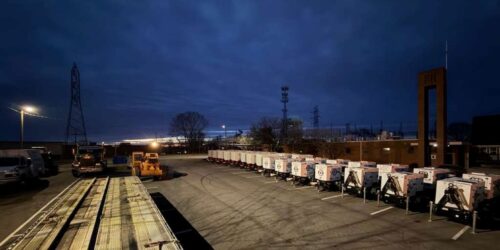
T‑Mobile Generators, Ready to Be Deployed, January 2026
4 min readListen IconListen
Listen to this article
0:00
- Facebook IconShare on Facebook
- Share on Twitter
- LinkedIn IconShare on LinkedIn
# __Update: February 2, 2026__
Winter Storm Gianna continues to impact parts of the East Coast with winter weather and hazardous travel conditions, though impacts remain localized. T‑Mobile’s network is performing well, and our teams, supported by advanced [network technology](https://www.t-mobile.com/news/disaster-definitions), are actively monitoring conditions and responding as needed.
Some retail locations in affected areas may experience temporary closures or delayed openings due to unsafe travel conditions for employees and customers. Customers are encouraged to check the [store locator](https://www.t-mobile.com/stores/locator) for the latest information on individual locations.
T‑Mobile remains ready to respond as conditions evolve, with network and Wi-Fi support [equipment](https://www.t-mobile.com/news/disaster-definitions) prepared to be deployed if needed. We’ll continue to prioritize the safety of our teams and customers while keeping people connected during severe weather.
How T-Mobile's Self-Organizing Network (SON) works in weather events and disasters.
\###
# __January 29, 2026__
As communities continue recovering from [Winter Storm Fern](https://www.t-mobile.com/news/network/t-mobiles-readiness-in-motion-as-widespread-winter-storm-fern-approaches), Winter Storm Gianna is expected to develop along the East Coast this weekend, beginning late Friday into Saturday. Current forecasts show the highest impacts will be across the Carolinas and southern Virginia, including heavy snow, strong winds, hazardous travel and potential power disruptions.
Our teams are closely monitoring conditions, coordinating with meteorologists and emergency management partners, and enhancing readiness to support customers, communities and first responders as the forecast evolves. That includes building on always-on network resilience, as well as taking additional, storm-specific steps:
- __Built-in network resilience__: Leveraging automated technologies like our Self-Organizing Network ([SON](https://www.t-mobile.com/news/disaster-definitions)), which continuously optimizes the network in real time as conditions change, including power outages, congestion and shifting demand.
- __Hardened infrastructure__: Network sites and critical equipment are designed and reinforced to better withstand severe weather.
- __Backup power readiness__: Ensuring batteries and generators are fueled, tested and ready to support sites if commercial power is disrupted.
- __Field and asset staging__: Positioning field teams and deployable network assets across potentially impacted areas to support rapid response if needed.
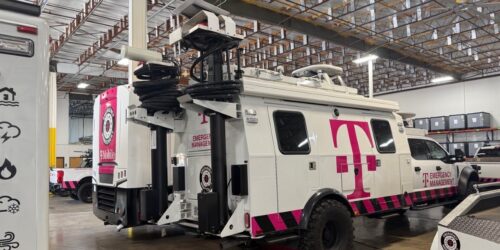
[__Deployable assets__](https://www.t%E2%80%91mobile.com/news/disaster-definitions?msockid=046b063336136fbc26ad131337b26e60) __and resources include:__
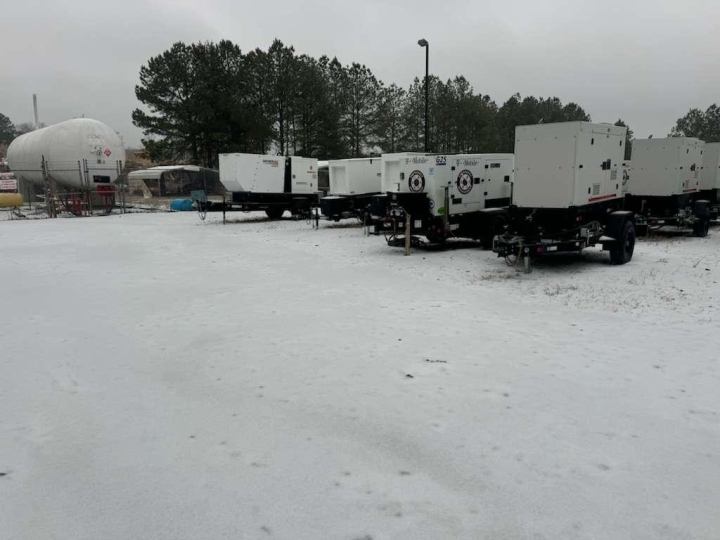
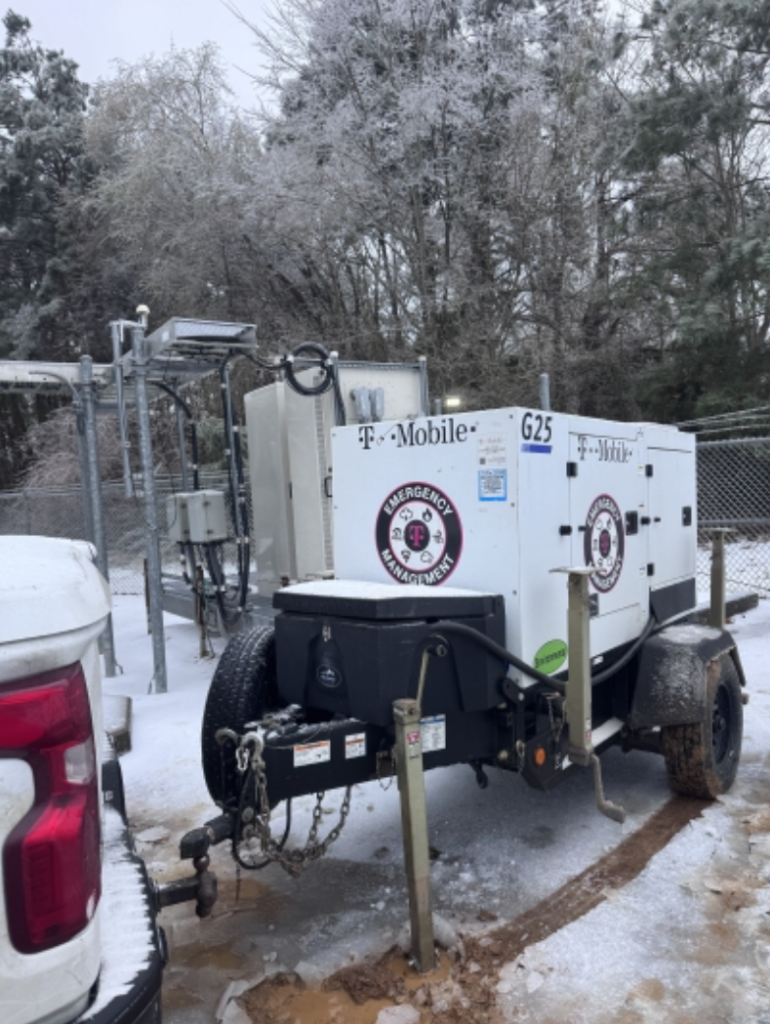
- Portable and fixed generators to support cell sites during power outages.
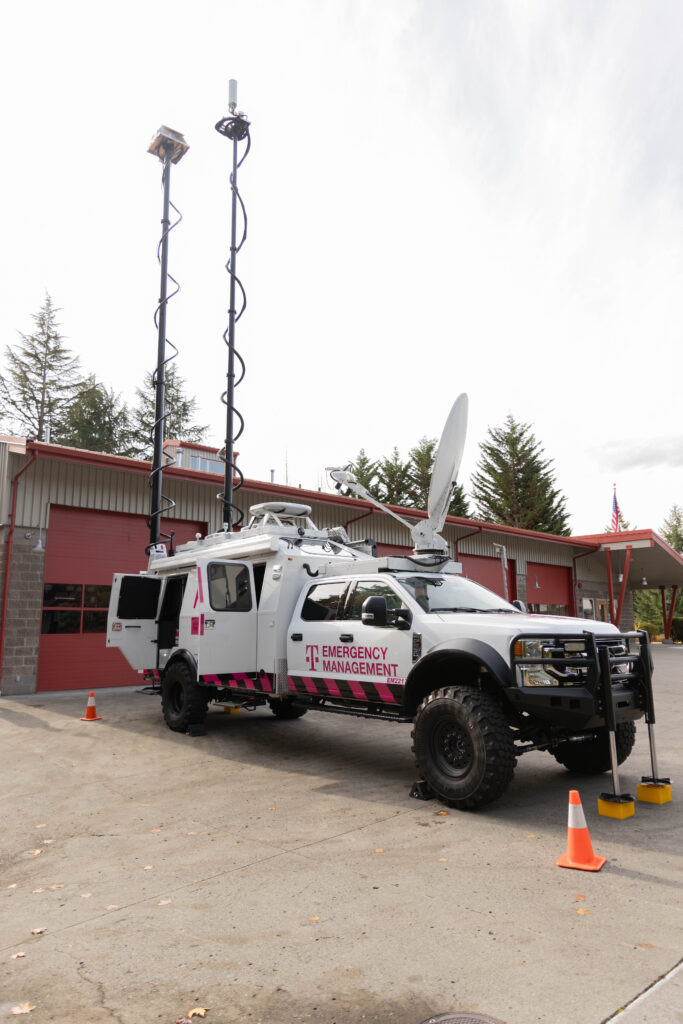
- Mobile cell sites, such as SatCOLTs (Satellite Cell on Light Trucks) and SatCOWs (Satellite Cell on Wheels), to restore or boost coverage.
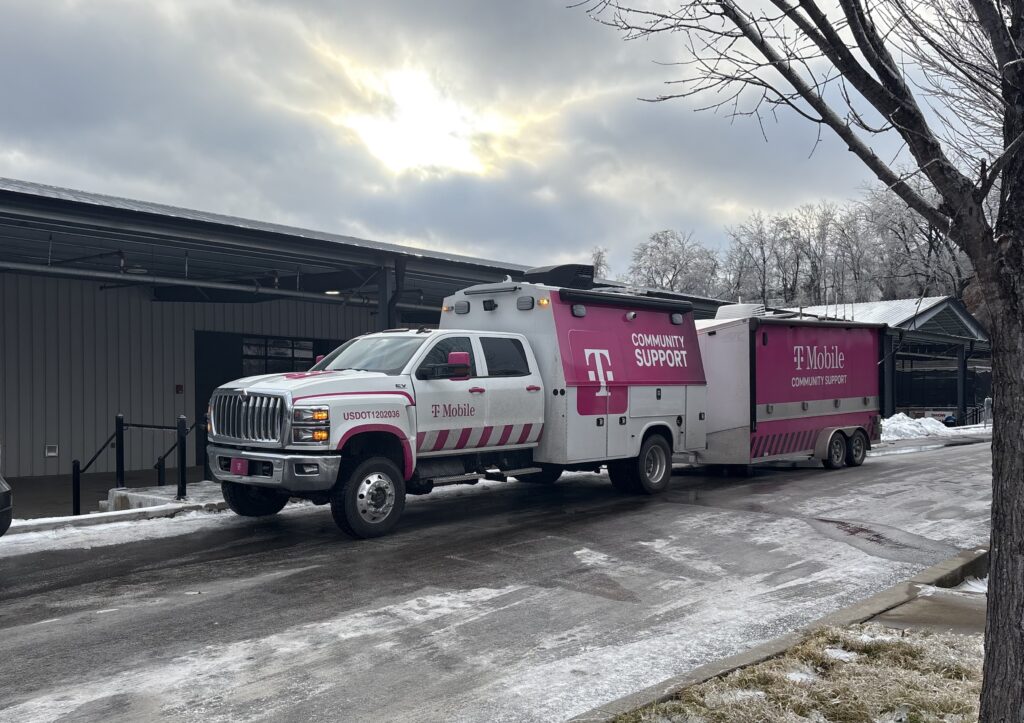
- Community support vehicles that can provide Wi-Fi connectivity and device charging to support community members, shelters and critical locations when power is disrupted.
- Satellite-based solutions, including [T-Satellite](https://www.t-mobile.com/coverage/satellite-phone-service), provide an additional layer of connectivity.
- Field technicians and mobile support teams positioned to respond as conditions allow.
Behind the scenes, T‑Mobile teams are working side by side with emergency management agencies and first responders, coordinating ahead of the storm to support critical communications and response efforts. That [partnership](https://www.t-mobile.com/business/government) is a key part of helping communities stay connected and informed when severe weather hits.
Brian Gould, Retired Police Chief and T-Mobile Public Safety Strategist
We encourage everyone in areas that may be affected to take a few simple steps to prepare, especially in communities still feeling the effects of the last storm.
### Winter Weather Preparedness Tips
### __Stay Connected__
- Save important contacts, including family, neighbors and local emergency numbers.
- If calls are difficult, try texting, which can be more reliable when networks are busy.
- If service is disrupted, satellite-based options like T-Satellite may help keep customers connected.
- If available, Wi-Fi Calling can support calls and texts when cellular service is limited.
- Keep emergency alerts enabled and watch for Wireless Emergency Alerts from local authorities.
### __Stay Powered__
- Save important contacts, including family, neighbors and local emergency numbers.
- Charge phones and essential devices ahead of the storm.
- Keep portable chargers or backup batteries on hand if possible.
- Conserve battery power by lowering screen brightness and closing unused apps, as cold temperatures can drain batteries faster than usual.
### __Stay Safe__
- Limit travel during severe winter weather when possible to avoid hazardous road conditions.
- Dress in layers and protect against extreme cold when outdoors.
- Check on neighbors, friends and family members who may need extra help nearby.
We’ll continue to monitor conditions and share updates as the forecast becomes clearer, with a focus on helping people stay connected, informed and safe. Please visit [T‑Mobile Emergency Response](https://www.t-mobile.com/news/emergency-response) and follow the T‑Mobile Newsroom on [X](https://x.com/tmobilenews) and [Instagram](https://www.instagram.com/tmobilenews/) for the latest updates.
[Arrow Right Icon](https://www.t-mobile.com/news/_admin/uploads/2026/01/T-MobileCommunitySupport_Fern2026.jpg)
T‑Mobile Community Support Truck, January 2026
[Arrow Right Icon](https://www.t-mobile.com/news/_admin/uploads/2026/01/Fern_trees_3.jpg)
T‑Mobile Generators, Ready to Be Deployed, January 2026
[Arrow Right Icon](https://www.t-mobile.com/news/_admin/uploads/2026/01/image-4.png)
T‑Mobile Deployed Generator, January 2026
[Arrow Right Icon](https://www.t-mobile.com/news/_admin/uploads/2026/01/TechnicianInFieldWinterStormFern2026.jpg)
T‑Mobile Tech, January 2026
[Arrow Right Icon](https://www.t-mobile.com/news/_admin/uploads/2026/01/25PC10024801_CNET_Bell_TG-54.jpg)
T‑Mobile SatCOLT
###
Tags[Business](https://www.t-mobile.com/news/archive/business)[Community](https://www.t-mobile.com/news/archive/community)[Consumer](https://www.t-mobile.com/news/archive/consumer)[Emergency Response](https://www.t-mobile.com/news/archive/emergency-response)[Government Affairs](https://www.t-mobile.com/news/archive/government-affairs)[Network](https://www.t-mobile.com/news/archive/network)[T-Satellite](https://www.t-mobile.com/news/archive/t-satellite)
## Related Stories
[More Stories](https://www.t-mobile.com/news/category/network)
[
\
NetworkPress Release
\
__T‑Mobile Helps Gulf Coast Communities Prepare as Tropical Storm Isaias Strengthens__
\
October 07, 2026|3 min read](https://www.t-mobile.com/news/network/t-mobile-helps-gulf-coast-communities-prepare-as-tropical-storm-isaias-strengthens)
[
\
NetworkPress Release
\
__T‑Mobile Teams Respond as Nor’easter Impacts East Coast__
\
September 27, 2026|2 min read](https://www.t-mobile.com/news/network/t-mobile-teams-respond-as-noreaster-impacts-east-coast)
[
\
NetworkPress Release
\
__T‑Mobile Continues Support Across Hawaiʻi as Hurricane Nolo Moves Away (Updated 9/27)__
\
September 25, 2026|4 min read](https://www.t-mobile.com/news/network/t-mobile-readies-network-and-response-resources-tropical-storm-nolo)
[
\
NetworkPress Release
\
__T‑Mobile Adds New AI-Powered Intelligence and Resilience to Make Its 5G Network Even Stronger__
\
September 24, 2026|8 min read](https://www.t-mobile.com/news/network/t-mobile-ai-and-resilience-make-5g-network-stronger)