[Skip to content](https://www.t-mobile.com/news/network/keeping-communities-connected-when-it-matters#maincontent)
[Newsroom](https://www.t-mobile.com/news)Toggle secondary navigation
- [Network](https://www.t-mobile.com/news/category/network)
- [Devices](https://www.t-mobile.com/news/category/devices)
- [Un-carrier](https://www.t-mobile.com/news/category/un-carrier)
- [Community](https://www.t-mobile.com/news/category/community)
- [Offers](https://www.t-mobile.com/news/category/offers)
- [Business](https://www.t-mobile.com/news/category/business)
English
[NetworkCategory](https://www.t-mobile.com/news/category/network)[Blog](https://www.t-mobile.com/news/blog)
# Keeping Communities Connected When It Matters Most
By John Saw, President of Technology and Chief Technology Officer at T-MobileDecember 19, 2025
[Arrow Right Icon](https://www.t-mobile.com/news/_admin/uploads/2025/12/25PC10024801_CNET_Bell_TG-54_3.jpg)
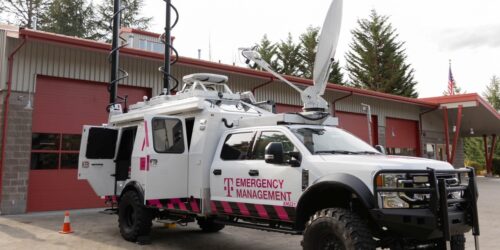
T‑Mobile SatCOLT in front of a fire station, 2025
4 min read
Download Media AssetsDownload Icon
- Facebook IconShare on Facebook
- Share on Twitter
- LinkedIn IconShare on LinkedIn
Storms, fires and floods hit communities every year. When they do, staying connected becomes a lifeline. In just the first half of 2025, the U.S. saw 14 separate billion-dollar disasters — with several more since.
At [T‑Mobile](https://www.linkedin.com/company/t-mobile/), keeping people connected in those moments is a responsibility we take personally. Our engineers and [emergency teams](https://www.t-mobile.com/news/emergency-response) work around the clock to prepare, innovate and restore service so people can call 911, reach loved ones and receive emergency alerts, including satellite-to-mobile messaging. [T‑Mobile For Business](https://www.linkedin.com/showcase/t-mobile-business/) introduced solutions like [T-Priority](https://www.linkedin.com/showcase/tpriority/) for first responders and SuperMobile for customers like FOX Weather and CNN to inform communities in real time.
As [*CNET*](https://www.cnet.com/tech/mobile/inside-t%E2%80%91mobile-emergency-response/) recently noted, our commitment to public safety has never been stronger, and it guides everything we do.
## A Year of Relentless Weather — and Relentless Response
This year brought one major event after another: Winter Storms Blair and Cora, devastating Texas floods, severe Midwest storms, fast-moving California wildfires and, most recently, the terrible floods here in Washington state. Each one put pressure on our network and our teams. And each time, T‑Mobile responded quickly and confidently.
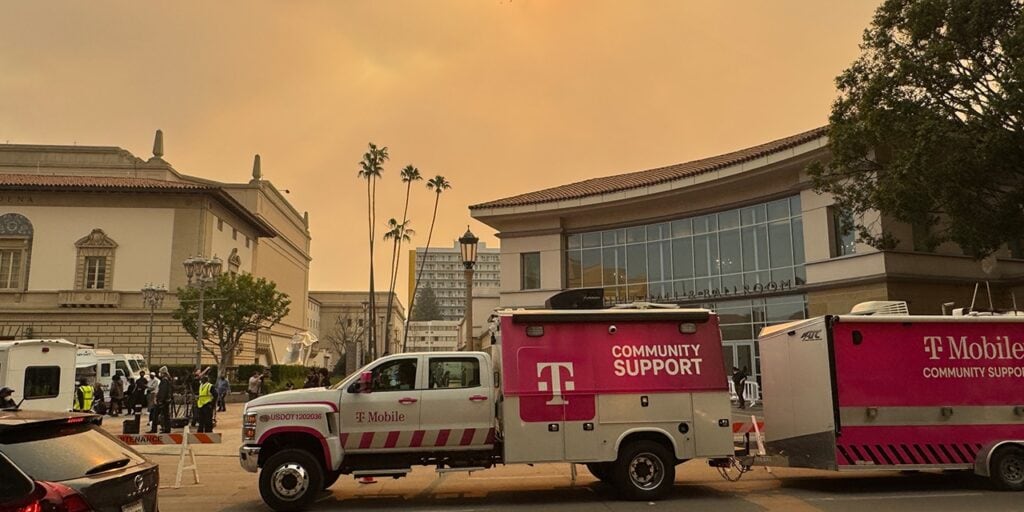
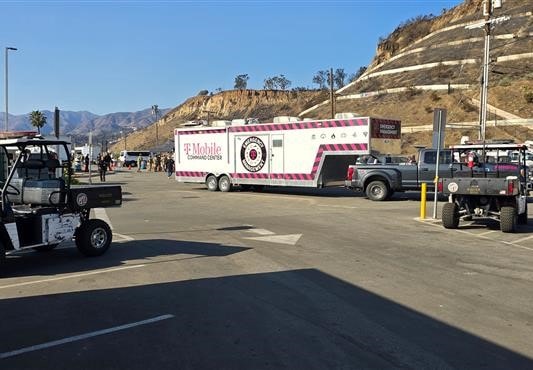
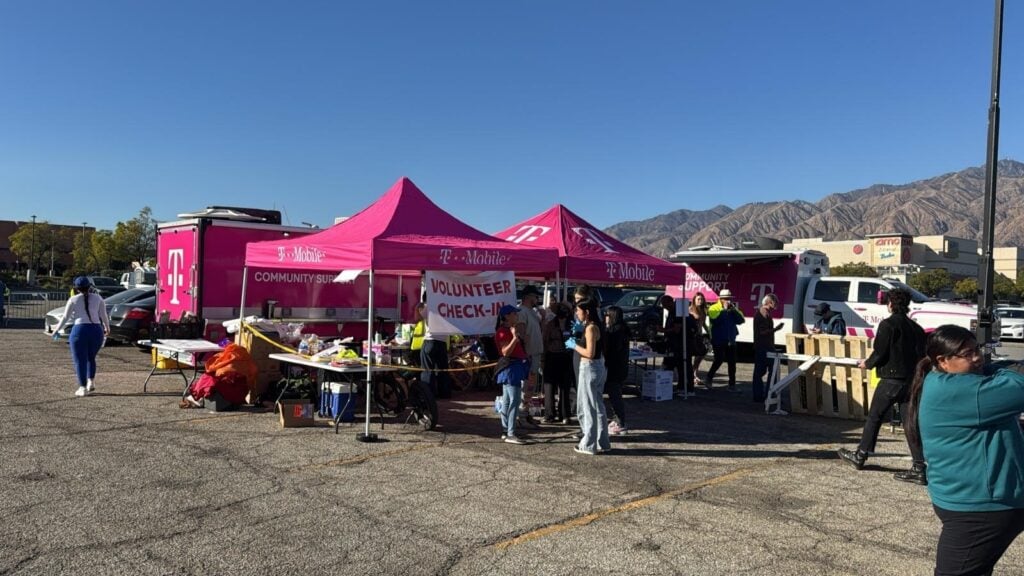
We deployed [mobile cell sites](https://www.t-mobile.com/news/disaster-definitions), generators and drones, while T-Priority gave first responders on our network a dedicated 5G network slice so their calls and data got the highest priority even under the heaviest congestion. In California, where wildfires continue to intensify, [T-Satellite](https://www.t-mobile.com/coverage/satellite-phone-service) with Starlink proved to be essential. When towers were damaged or commercial power failed, we turned on T-Satellite, ahead of launch, so people with compatible phones could still text 911 and loved ones, showing how vital satellite connectivity has become.
## The Technology Behind the Response
Strong disaster response doesn’t happen only in the moment. It comes from years of innovation and investment, and from teams who are constantly improving how we support customers and first responders.
Our [Self-Organizing Network](https://www.t-mobile.com/news/disaster-definitions) (SON), powered by advanced AI and automation, continuously monitors and adjusts the network. If a tower goes down, the SON can tilt antennas, reroute traffic and fill temporary coverage gaps so the maximum amount of customers remain connected. During this year’s weather events, it made nearly 5 million network adjustments that kept families and public safety agencies connected.
T-Priority, running on our nationwide 5G Standalone core, gives first responders on our network our highest level of network priority with up to five times the resources of typical users. Agencies like the Las Vegas Metropolitan Police Department used it during this year’s Las Vegas Grand Prix to keep their communications strong and fans safe.
How T-Mobile's T-Priority works in action during disasters
And when traditional coverage is impacted during severe events, T-Satellite is a game-changer. It has already supported more than a million messages during disasters, including the Texas floods, Los Angeles fires and Hurricanes Helene and Milton. In November, we added T‑Mobile Text to 911 via satellite at no extra cost for anyone [who signs up](https://www.t-mobile.com/coverage/satellite-phone-service/911-texting-signup) with a compatible device, regardless of their primary wireless provider. It’s another step toward making lifesaving communication universal. And as the first-ever satellite-to-cell network to enable authorities to broadcast Wireless Emergency Alerts, we are giving first responders new tools to reach and protect more people, regardless of their wireless provider.
## Preparing All Year, Not Just During Crisis
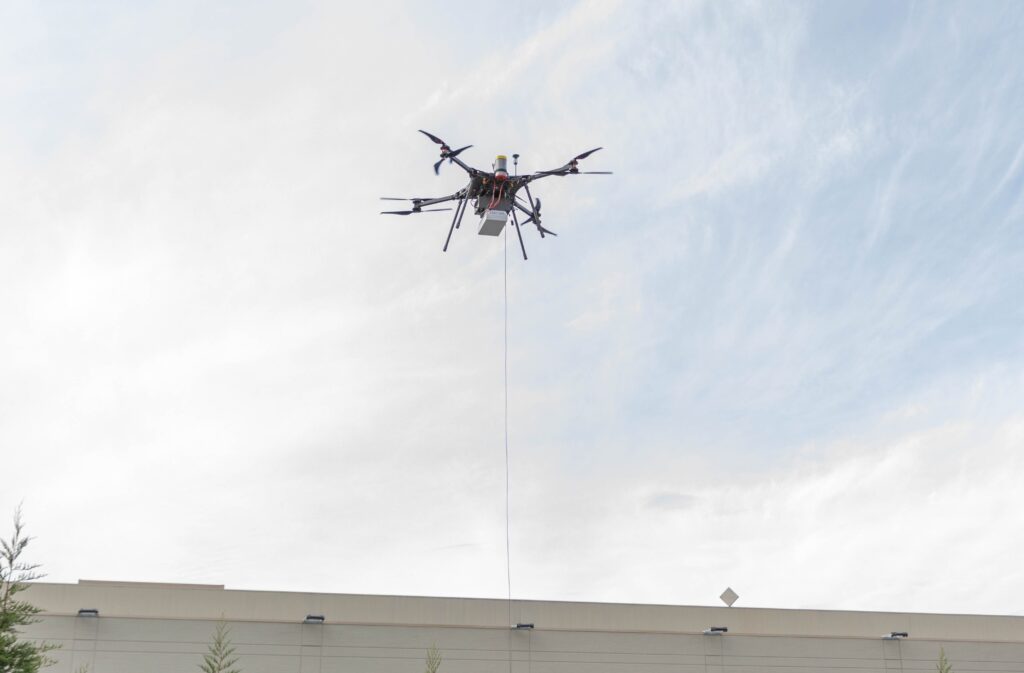
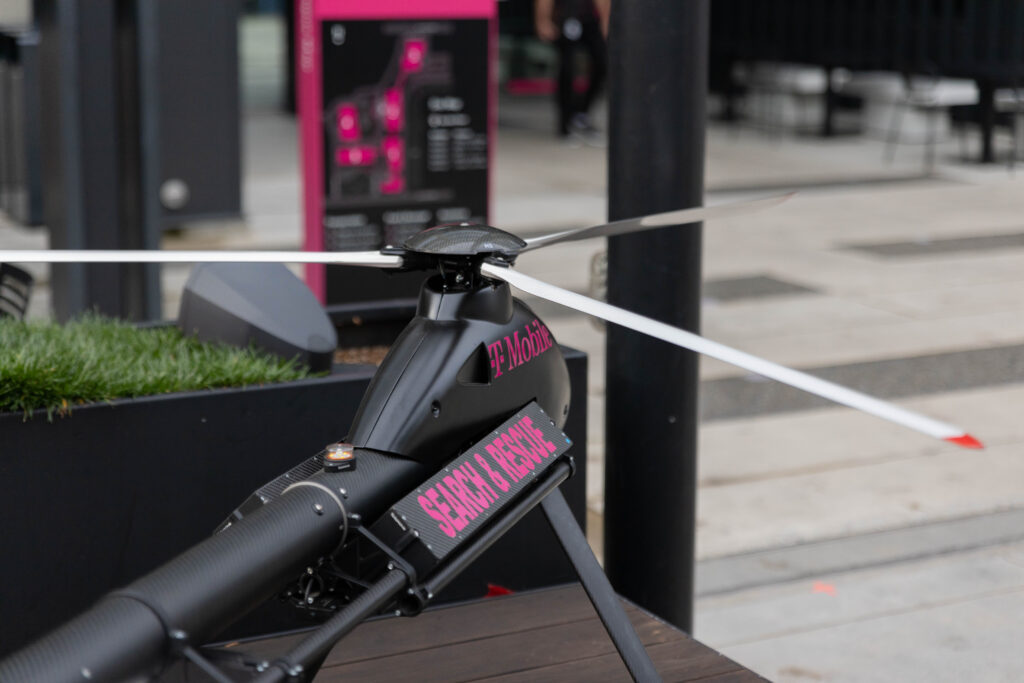
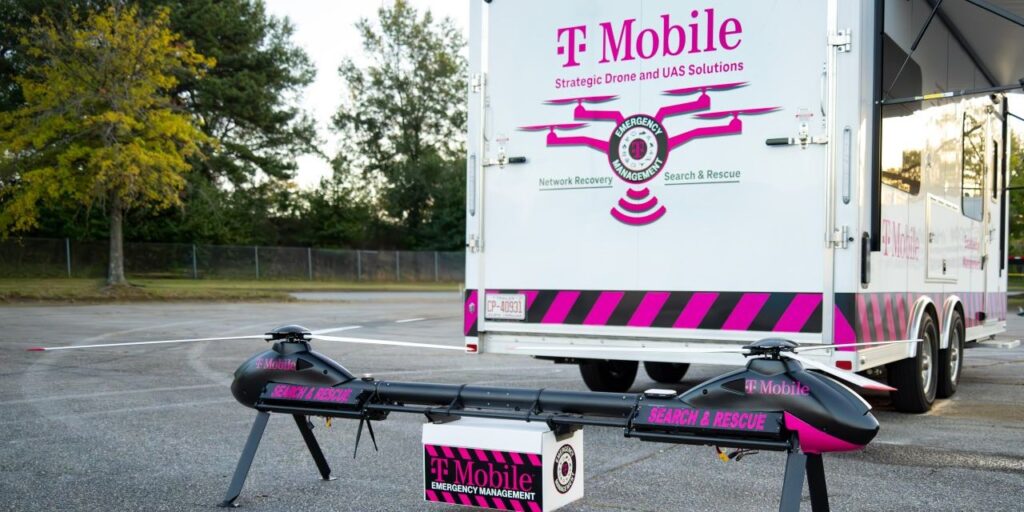
As I mentioned to [*CNET*](https://www.cnet.com/tech/mobile/this-is-what-keeps-t%E2%80%91mobiles-emergency-response-teams-awake-at-night/), our goal is to make sure the network never goes down because if it does, we are letting someone down. With that in mind, our dedication and fast response starts long before a storm appears on radar. This year, we expanded our drone fleet by 50%, adding heavy-lift, search-and-rescue and tethered drones. They map damage, locate people with thermal imaging and LiDAR, deliver gear and even broadcast temporary Standalone 5G across a 2-mile radius. These drones supported Texas Parks & Wildlife during flooding and assisted law enforcement in Western North Carolina after Hurricane Helene.
[Arrow Right Icon](https://www.t-mobile.com/news/_admin/uploads/2025/12/25PC10024801_CNET_Bell_TG-92.jpg)
T‑Mobile tethered drone providing connectivity
## Committed to What Comes Next
T‑Mobile’s commitment to the communities we serve is unwavering. We’ll keep strengthening our systems, expanding our network and pushing the boundaries of innovation so people can stay connected when it matters most.
I’m incredibly proud of the progress we’ve made and even more excited about what comes next.
[Arrow Right Icon](https://www.t-mobile.com/news/_admin/uploads/2025/12/25PC10024801_CNET_Bell_TG-29.jpg)
Search & rescue drone
[Arrow Right Icon](https://www.t-mobile.com/news/_admin/uploads/2025/12/25PC10024801_CNET_Bell_TG-54.jpg)
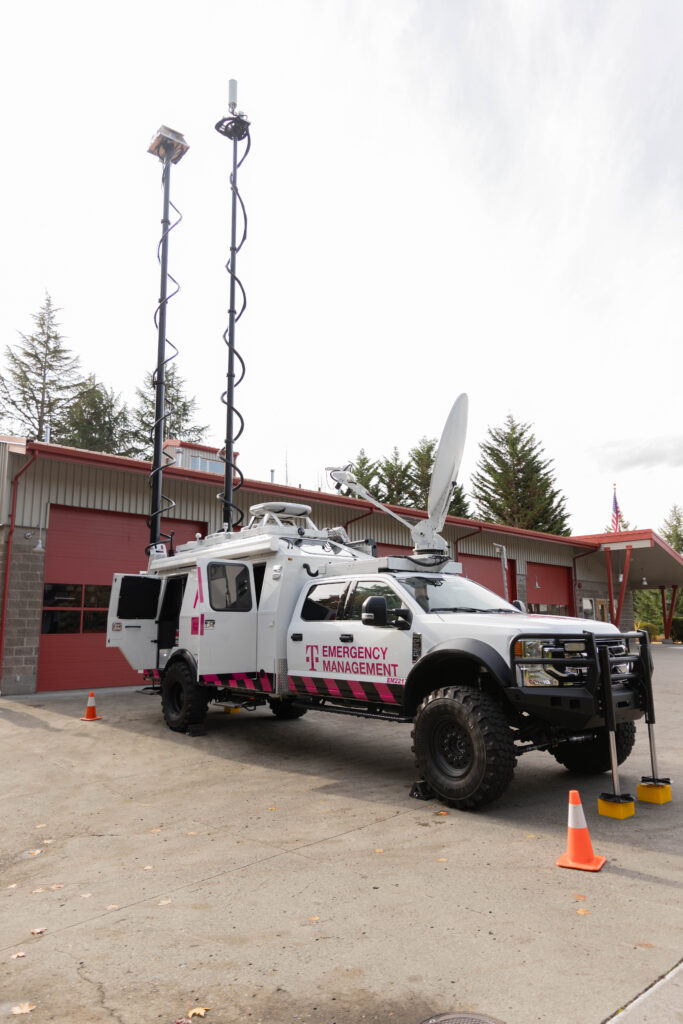
T‑Mobile SatCOLT
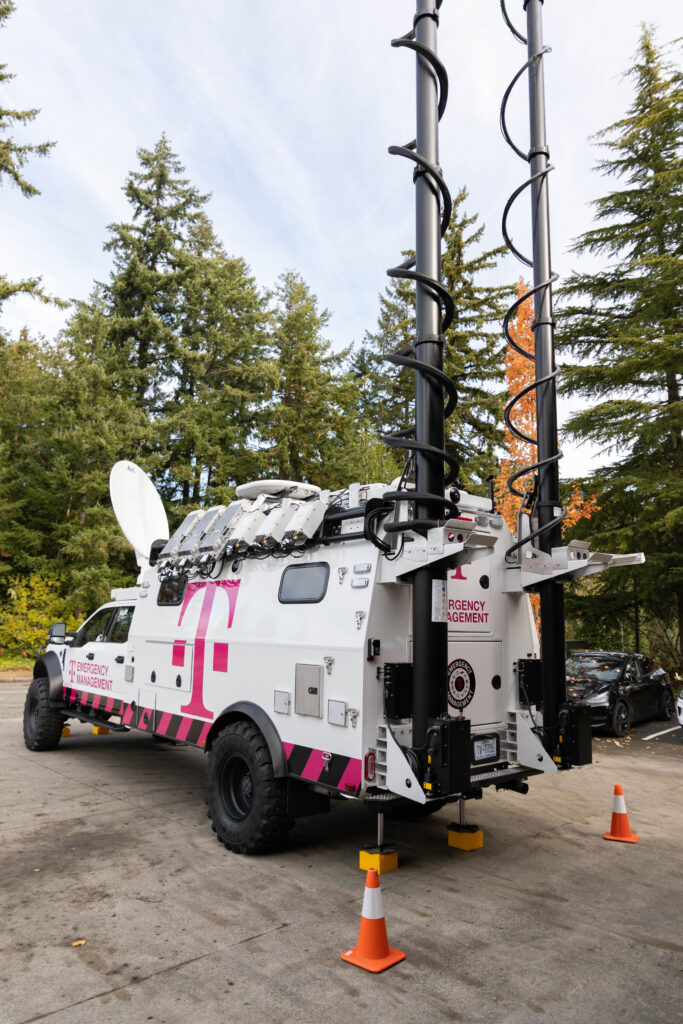[Arrow Right Icon](https://www.t-mobile.com/news/_admin/uploads/2025/12/25PC10024801_CNET_Bell_TG-45.jpg)
T‑Mobile SatCOLT
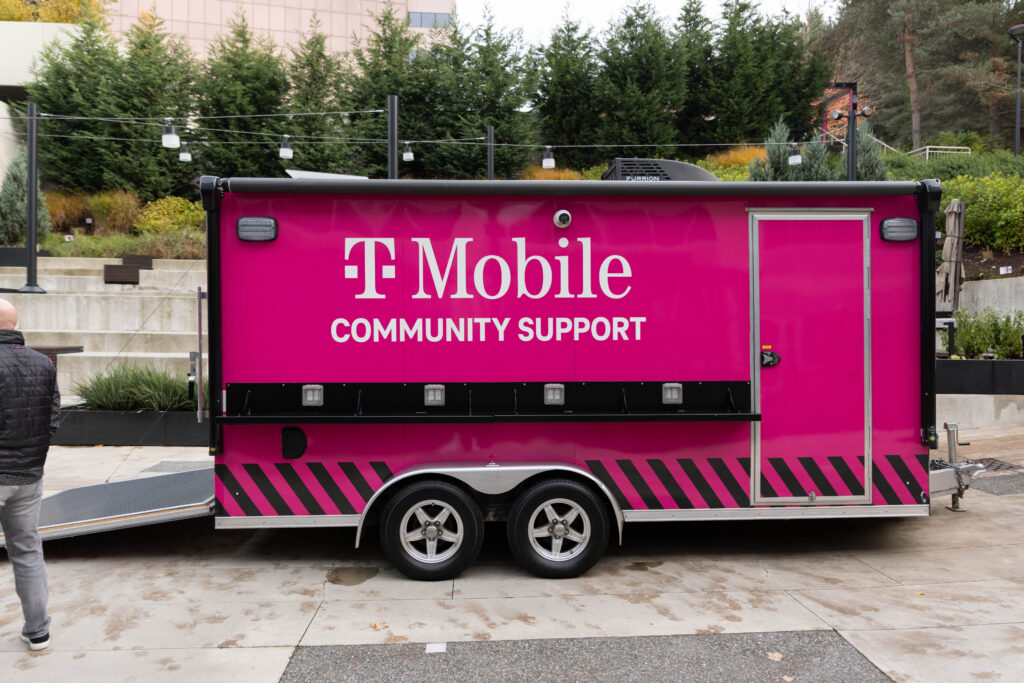[Arrow Right Icon](https://www.t-mobile.com/news/_admin/uploads/2025/12/25PC10024801_CNET_Bell_TG-33.jpg)
T‑Mobile Community Support trailer
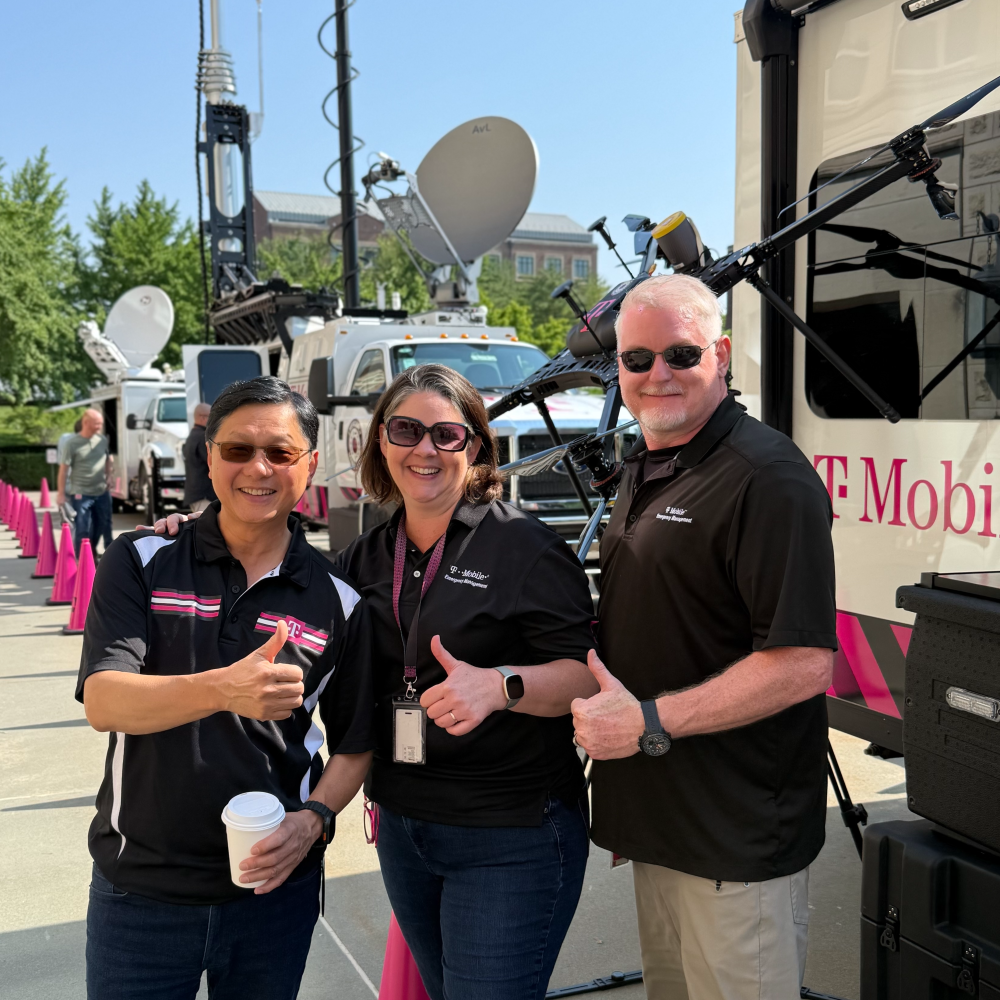[Arrow Right Icon](https://www.t-mobile.com/news/_admin/uploads/2025/12/ERT-team-at-demonstration.png)
John Saw and members of the emergency management team at a planned disaster preparedness demonstration.
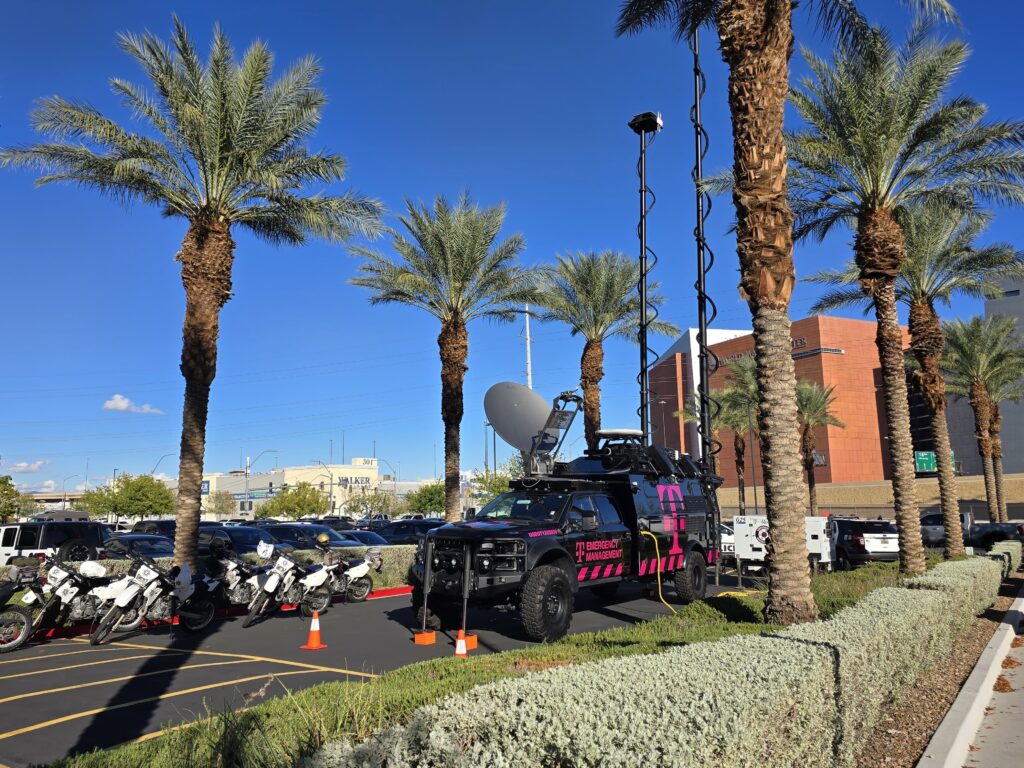[Arrow Right Icon](https://www.t-mobile.com/news/_admin/uploads/2025/11/T-Mobile-SatCOLT-at-LVGP-2025.jpg)
T‑Mobile's NOMAD SatCOLT supporting connectivity at FORMULA 1 HEINEKEN LAS VEGAS GRAND PRIX, 2025
[Arrow Right Icon](https://www.t-mobile.com/news/_admin/uploads/2025/08/Heavy-Lift-Drone_Hero.jpg)
T‑Mobile Heavy Lift Drone
[Arrow Right Icon](https://www.t-mobile.com/news/_admin/uploads/2025/08/LA-Fire-Hero-v2.jpg)
T‑Mobile Community Support truck
[Arrow Right Icon](https://www.t-mobile.com/news/_admin/uploads/2025/08/T-MobileMobileCommandCenter_SoCal2025.jpg)
T‑Mobile Command Center
[Arrow Right Icon](https://www.t-mobile.com/news/_admin/uploads/2025/08/CommunitySupport_SoCal2025.jpg)
Community Support
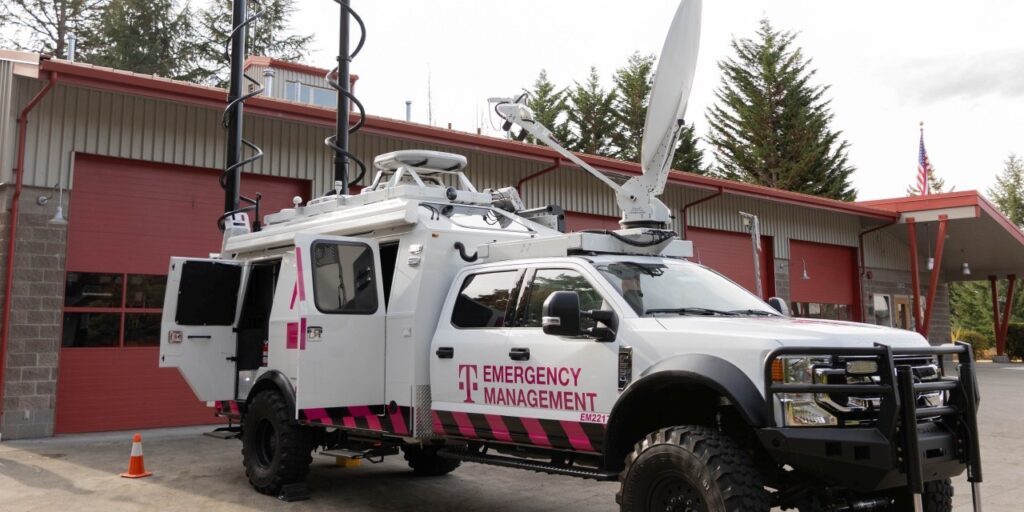[Arrow Right Icon](https://www.t-mobile.com/news/_admin/uploads/2025/12/25PC10024801_CNET_Bell_TG-54_3.jpg)
T‑Mobile SatCOLT in front of a fire station, 2025
[Arrow Right Icon](https://www.t-mobile.com/news/_admin/uploads/2025/12/25PC10024801_CNET_Bell_TG-92.jpg)
T‑Mobile tethered drone providing connectivity
T‑Mobile emergency response teams and tools in 2025
\###
Tags[5G](https://www.t-mobile.com/news/archive/5g)[Business](https://www.t-mobile.com/news/archive/business)[Community](https://www.t-mobile.com/news/archive/community)[Emergency Response](https://www.t-mobile.com/news/archive/emergency-response)[Network](https://www.t-mobile.com/news/archive/network)[T-Mobile for Business](https://www.t-mobile.com/news/archive/t-mobile-for-business)
## Related Stories
[More Stories](https://www.t-mobile.com/news/category/network)
[
\
NetworkPress Release
\
__T‑Mobile Adds New AI-Powered Intelligence and Resilience to Make Its 5G Network Even Stronger__
\
September 24, 2026|8 min read](https://www.t-mobile.com/news/network/t-mobile-ai-and-resilience-make-5g-network-stronger)
[
\
CommunityPress Release
\
__Stay Safe, Stay Prepared, Stay Connected: Simple Steps Before Severe Weather Strikes__
\
September 23, 2026|4 min read](https://www.t-mobile.com/news/community/stay-safe-prepared-connected-before-severe-weather-strikes)
[
\
NetworkPress Release
\
__T‑Mobile Is Ready to Keep New York Connected During UNGA81__
\
September 22, 2026|2 min read](https://www.t-mobile.com/news/network/t-mobile-is-ready-to-keep-new-york-connected-during-unga81)
[
\
DevicesStory
\
__What Your iPhone 18 Pro Color Choice Says About You__
\
September 18, 2026|6 min read](https://www.t-mobile.com/news/devices/iphone-18-pro-color-choice)